


Why Your Ducted Heating System Is Not Warming Properly
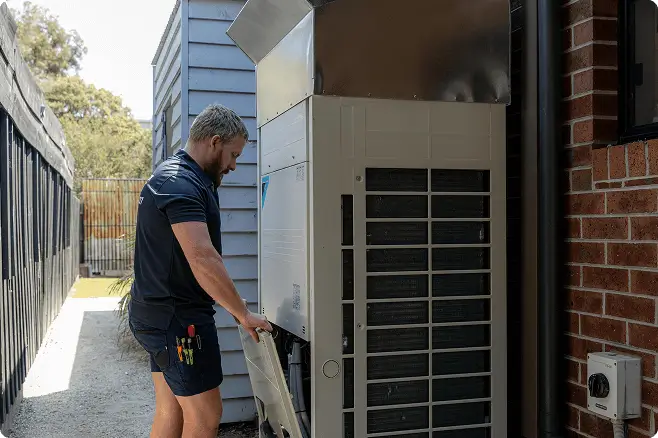
You hear the heater start. Air reaches the vents. Yet the house still feels cold long after it should have become comfortable.
That pattern is more useful than it may seem. A ducted heating system that runs without warming the home properly is not the same problem as a system that will not start. The cause may sit in the controls, the return-air path, heat production, air delivery or the way the system stops and starts.
First, look at the size of the problem
Walk through the house without changing every setting as you go. Is the whole home slow to warm, or is most of the house comfortable while one room lags?
A whole-home problem points the investigation towards the central system, controller, return air or overall airflow. One weak room is a different pattern. It may relate to that room, zone or duct branch and should be described separately when you book.
Also note when the change began. A sudden loss of heat after normal performance needs a different check from a system that has gradually taken longer over several Melbourne cold spells.
Check what the controller is asking the system to do
Make sure the controller is set to heating, the target temperature is above the room temperature and any programmed schedule is not ending the heating period early. If the home has zones, note which ones are selected.
Give the system its normal start-up time, based on the manufacturer’s instructions. Constantly changing the target temperature will not help a technician understand the original fault. If an error code appears, photograph or write it down rather than clearing it repeatedly.
These are observation steps, not a repair. Do not remove the heater cover or attempt to adjust gas, electrical or internal control components.
Weak airflow changes the line of enquiry
If the air at several outlets is warm but faint, look for simple obstructions around the return-air grille and supply outlets. Furniture, stored items and closed or covered vents can affect how air moves.
Check a user-serviceable filter only in the way described by the system manufacturer. A restricted filter can reduce airflow, but it is not the answer to every heating complaint. Duct condition, fan operation and other system faults can create a similar symptom.
Strong airflow that stays cool after the normal warm-up period points in another direction. The system may be moving air without producing or delivering enough heat. Gas and electric ducted heaters do not share one fault list, so this is where model details and the operating sequence matter.
Notice what happens before the heat disappears
Some systems start, warm briefly and then stop. Others cycle repeatedly, shut down with a code or lose heat after running for a while. Tell the technician exactly what happens before the change.
Stop using the heater and seek urgent help if there is smoke, sparking, a burning smell, a suspected gas smell or repeated power tripping. Move to a safe place and call emergency services if there is immediate danger.
Give the technician a pattern to test
Before booking, record five things:
- whether the problem affects the whole home or selected zones;
- the controller mode and target temperature;
- how the air feels at several outlets;
- any code, sound or smell; and
- what the system does from switch-on to shutdown.
That short record is more useful than asking for a general clean. It helps separate maintenance from a defined repair and reduces the chance of treating one symptom as the whole problem.
HomeFirst’s ducted heating installation and repair service gives Melbourne homeowners a direct next step when the system runs but the home remains cold.
Tell the team what happens from the moment you switch the heater on. HomeFirst can use that sequence, along with the system type and affected areas, to arrange the right diagnostic visit.

Blogs

From Pipes to Progress: The Tech-Driven Evolution of Plumbing
From leak-detecting sensors to eco-friendly water systems, discover the innovations shaping the future of plumbing....

 Call Us 1300 353 193
Got an Emergency?
Call Us 1300 353 193
Got an Emergency?
Call Us 1300 353 193
Got an Emergency?
Call Us 1300 353 193
Got an Emergency?
Call Us 1300 353 193
Got an Emergency?
Call Us 1300 353 193
Got an Emergency?
Call Us 1300 353 193
Got an Emergency?
Call Us 1300 353 193
Got an Emergency?
Call Us 1300 353 193
Call Us 1300 353 193
Got an Emergency?
Call Us 1300 353 193
Got an Emergency?
Call Us 1300 353 193
Got an Emergency?
Call Us 1300 353 193
Got an Emergency?
Call Us 1300 353 193
Got an Emergency?
Call Us 1300 353 193
Got an Emergency?
Call Us 1300 353 193
Got an Emergency?
Call Us 1300 353 193
Got an Emergency?
Call Us 1300 353 193